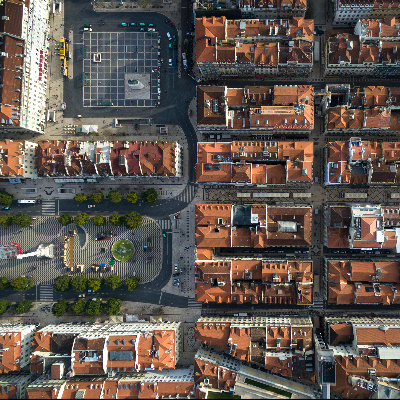
It has been a month since the second amendment to the Municipal Local Accommodation Regulation (RMAL) came into force, whose most relevant decision is as follows: one in ten houses in the municipality of Lisbon can be used as a Local Accommodation (short-term renting) establishment.
While the entire country, from the café closest to your place to the Parlamient (where a new “housing package” is being voted on this week), cries out that housing is one of the greatest national challenges, in Lisbon, perhaps the most pressured of Portugal's 308 municipalities, it has been decided that 10% of the city's dwelings may, instead of serving the purpose for which they were built and licensed — a place to be lived in — be used to provide “temporary accommodation services, namely to tourists, for remuneration.”
This text is an observation stripped of ideology — it is fair to recognize that the new regulation includes some relevant provisions — about the city, the function expected of it, and, more importantly (because this is what is invariably forgotten in all discussions on the subject), a reflection on the extent to which it makes sense, or not, to occupy properties that are legally intended for housing, for tourism purposes.
On the other hand, it is also important to recognize that, in different parts of the country, Local Accommodation (AL) has played a positive role, particularly in contexts of urban regeneration, economic revitalization, and enhancement of the territory.